Connected and Automated Vehicles
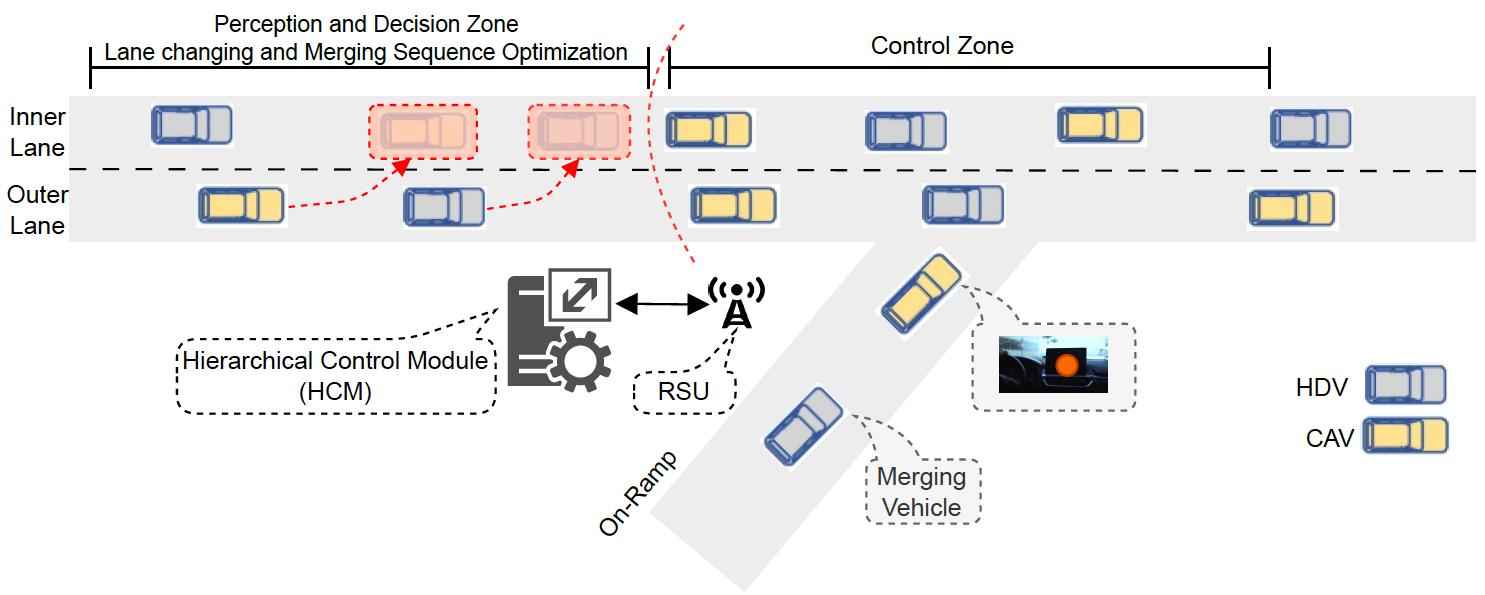
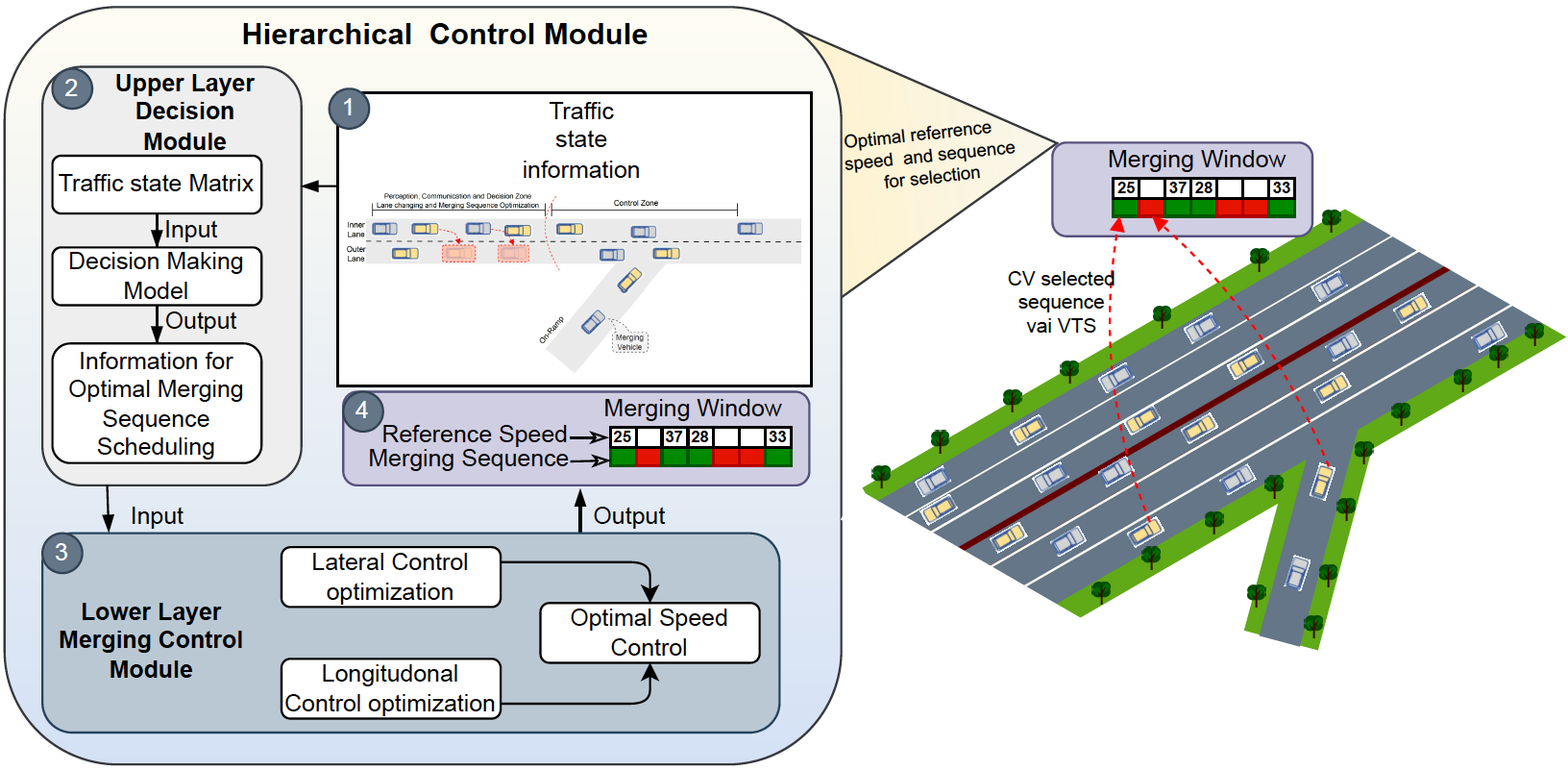
While advances in aerospace technologies continue to accelerate, rapid urbanization and population growth are placing increasing strain on ground transportation systems, leading to severe congestion and significant economic and societal costs. Addressing these challenges requires the development of sustainable, energy-efficient, and intelligent transportation systems. Connected and automated vehicle (CAV) technologies offer transformative potential to enhance mobility, improve safety, and reduce energy consumption through vehicle-to-vehicle (V2V) and vehicle-to-infrastructure (V2I) communications. However, realizing this potential requires overcoming key challenges related to coordinating large numbers of vehicles and optimizing traffic operations at scale under real-time constraints. In our lab, we develop novel hybrid frameworks that integrate computational optimal control and machine learning methods for coordinated traffic management, including traffic signal control and vehicle-level decision-making. Our approaches are designed to efficiently handle large-scale, networked systems while operating within limited computational resources. By integrating model-based optimization with data-driven techniques, we aim to enable scalable, real-time solutions that improve traffic flow, enhance safety, and reduce energy consumption in next-generation transportation systems.