Powered Descent and Landing
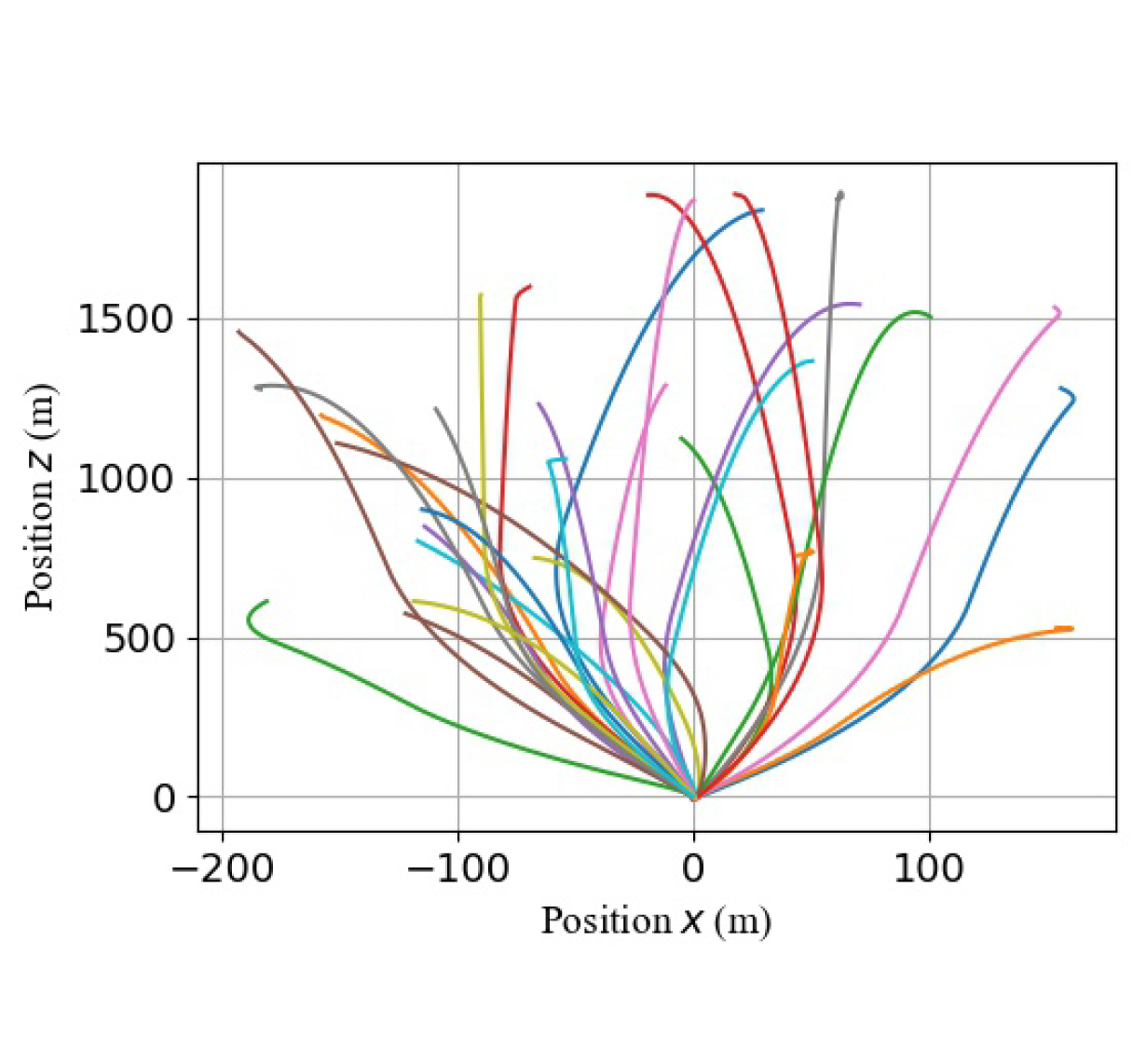
Real-time, high-precision landing is critical for missions to the Moon, planetary bodies, and asteroids. In our lab, we develop both model-based convex optimization and data-driven learning-based approaches to enhance landing performance and reliability. On the optimization side, we formulate the powered descent problem using variable transformations, lossless convex relaxation, sequential convex programming, and second-order cone representations of key constraints. These techniques enable reliable convergence while maintaining high computational efficiency, making them well suited for real-time implementation. In parallel, we investigate deep neural network (DNN)-based and physics informed neural networks (PINN)-based approaches for real-time optimal control. These methods enable precise and robust soft landings in environments with complex and irregular gravitational fields. DNNs are leveraged both to construct fast and accurate surrogate models and to directly infer optimal control actions based on the current flight state. The resulting frameworks are fast, robust, and suitable for onboard autonomous operation.
Orbit Transfer
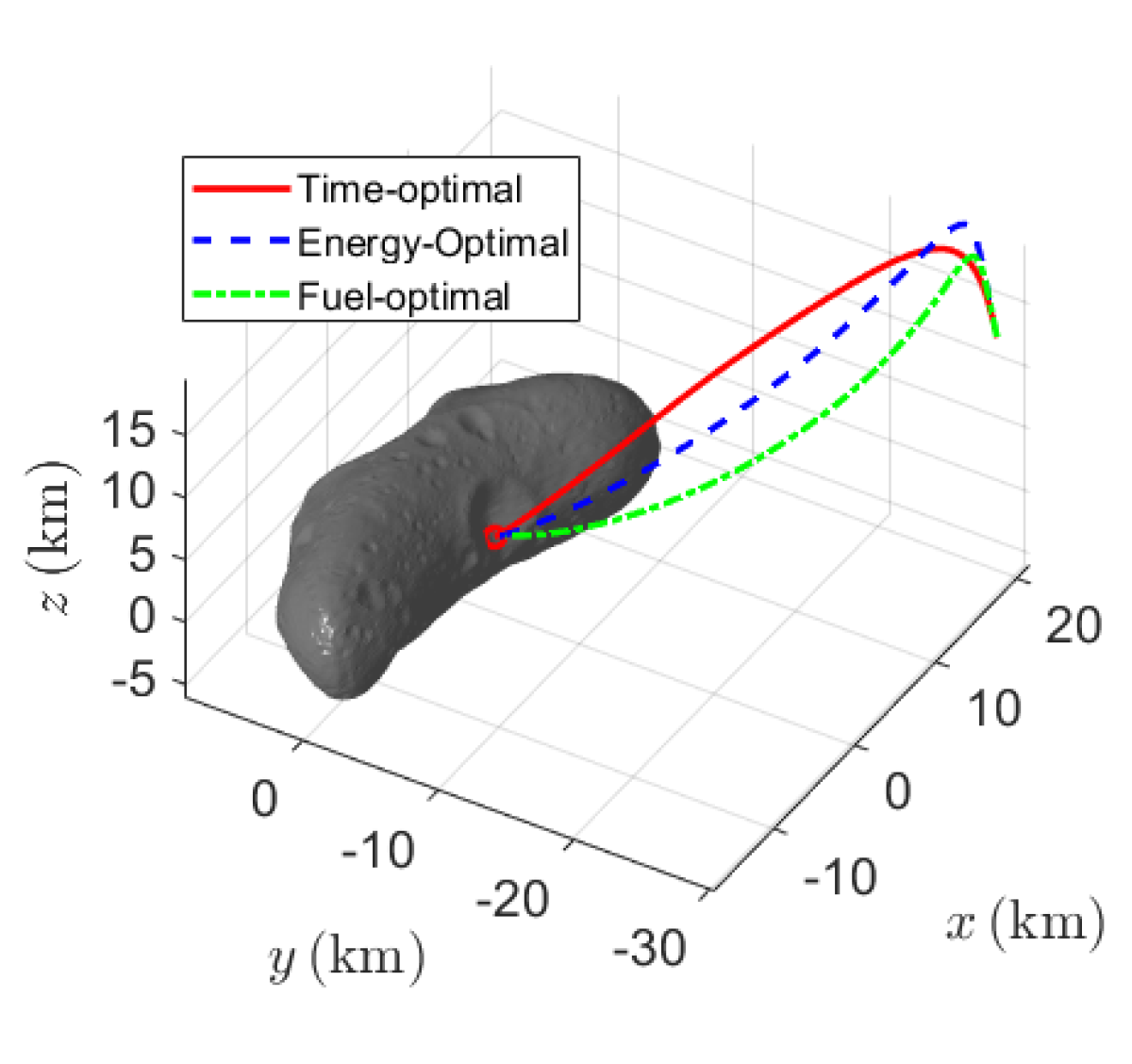
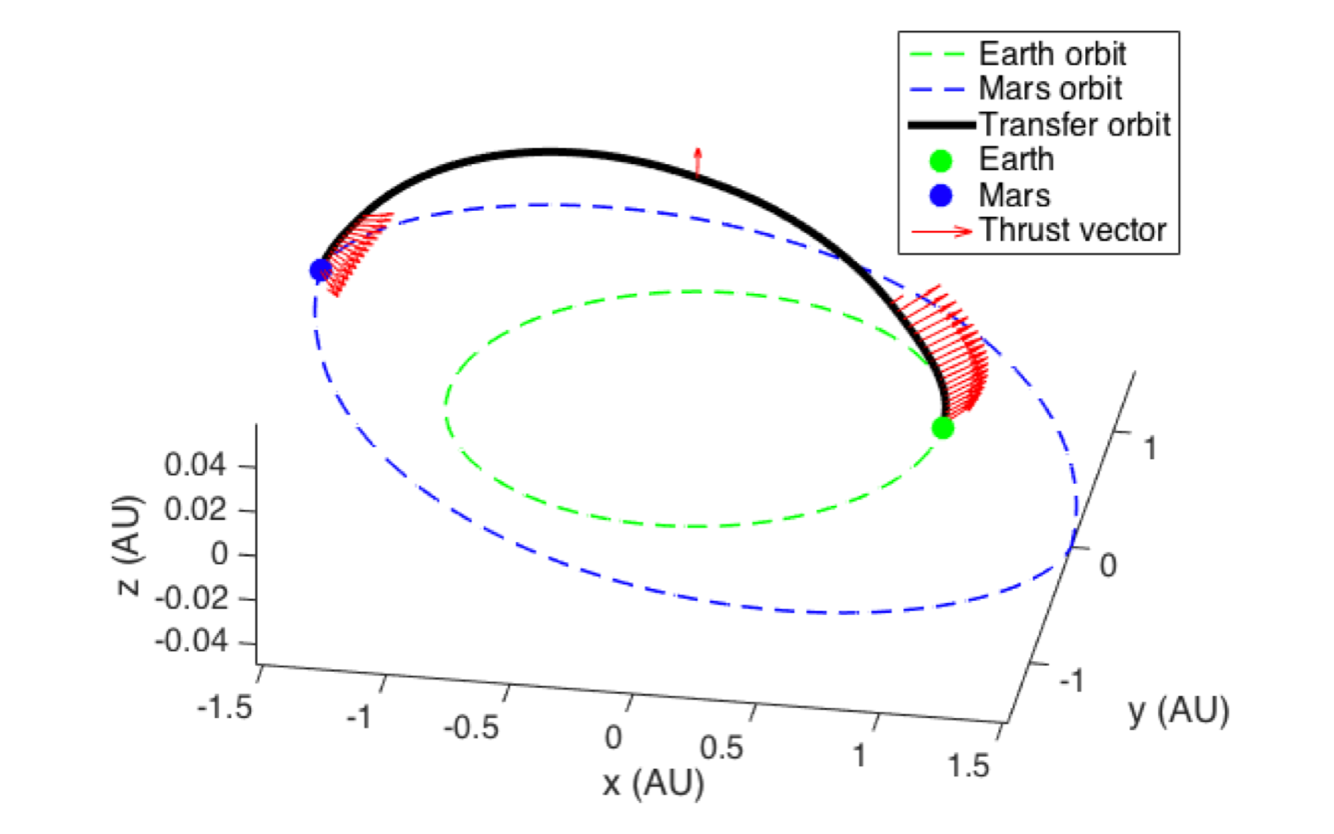
Trajectory optimization and control for spacecraft orbit transfers play a central role in both geocentric and interplanetary missions. Low-thrust propulsion systems are of particular interest due to their high efficiency compared to conventional chemical propulsion. However, the associated optimization problems are challenging because they typically involve long transfer durations, multiple revolutions, and complex dynamical constraints. Our research focuses on exploiting the underlying structure of these problems to develop efficient convex optimization algorithms and learning-assisted methods for real-time onboard applications. These approaches significantly reduce computational complexity while maintaining solution accuracy, enabling practical implementation of autonomous orbit transfer strategies.
Hypersonic Entry
Hypersonic atmospheric entry requires carefully managing energy dissipation while satisfying stringent thermal, aerodynamic, and operational constraints. The associated trajectory optimization problem is highly challenging due to nonlinear dynamics, strong aerodynamic coupling, and multiple path constraints. In our lab, we develop convex-optimization-based methods for real-time trajectory generation and autonomous entry guidance. These approaches provide fast, reliable, and implementable solutions while enforcing mission constraints and maintaining high accuracy across a range of hypersonic scenarios. In addition, we explore machine learning techniques to address complex entry dynamics and improve adaptability in uncertain environments. By combining model-based and data-driven methods, we aim to enable robust and efficient guidance for next-generation hypersonic missions.